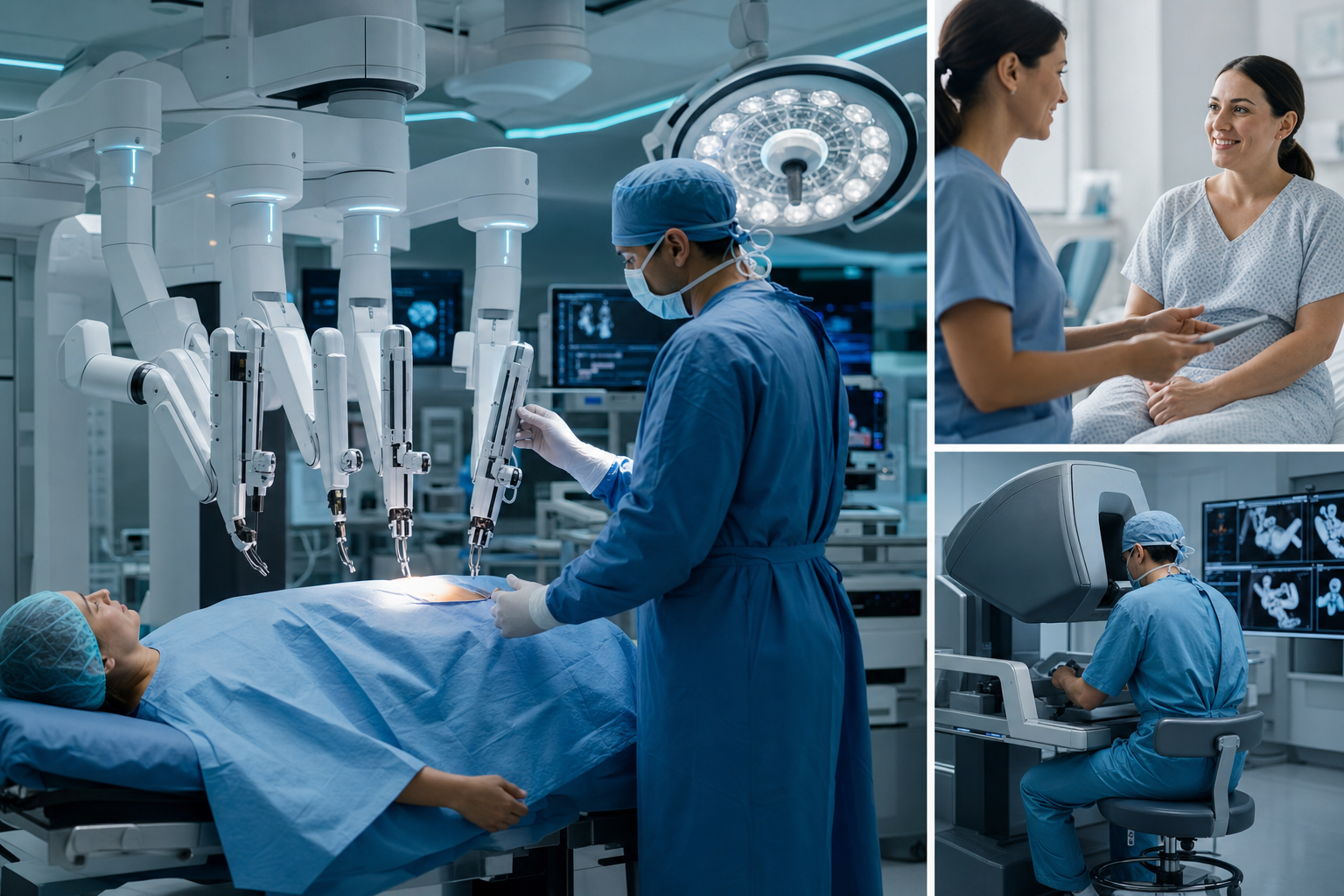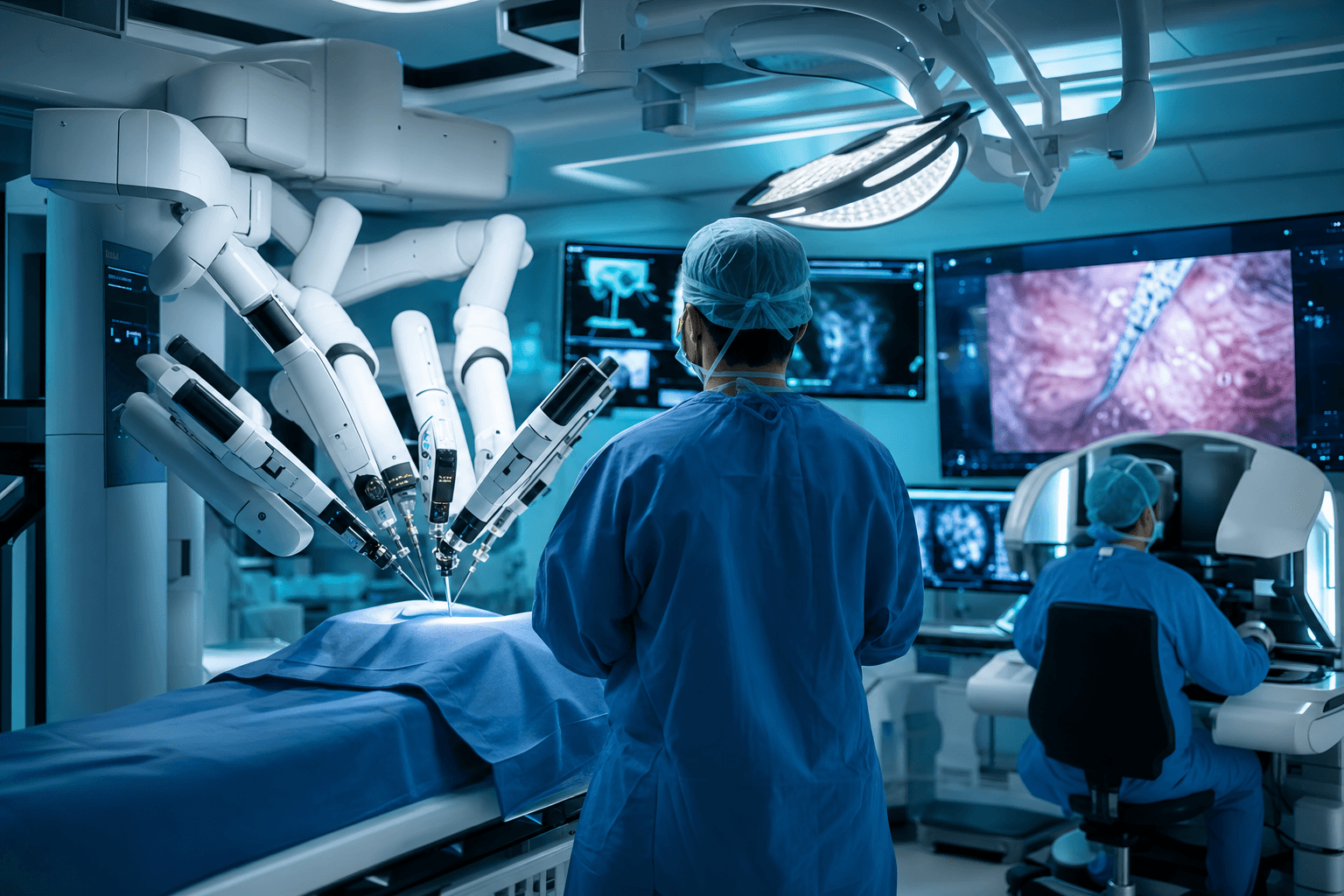
The da Vinci Era and Beyond: How One Machine Shaped Modern Surgery
12 June 2026 · By Robotic.mu · Updated 5 July 2026
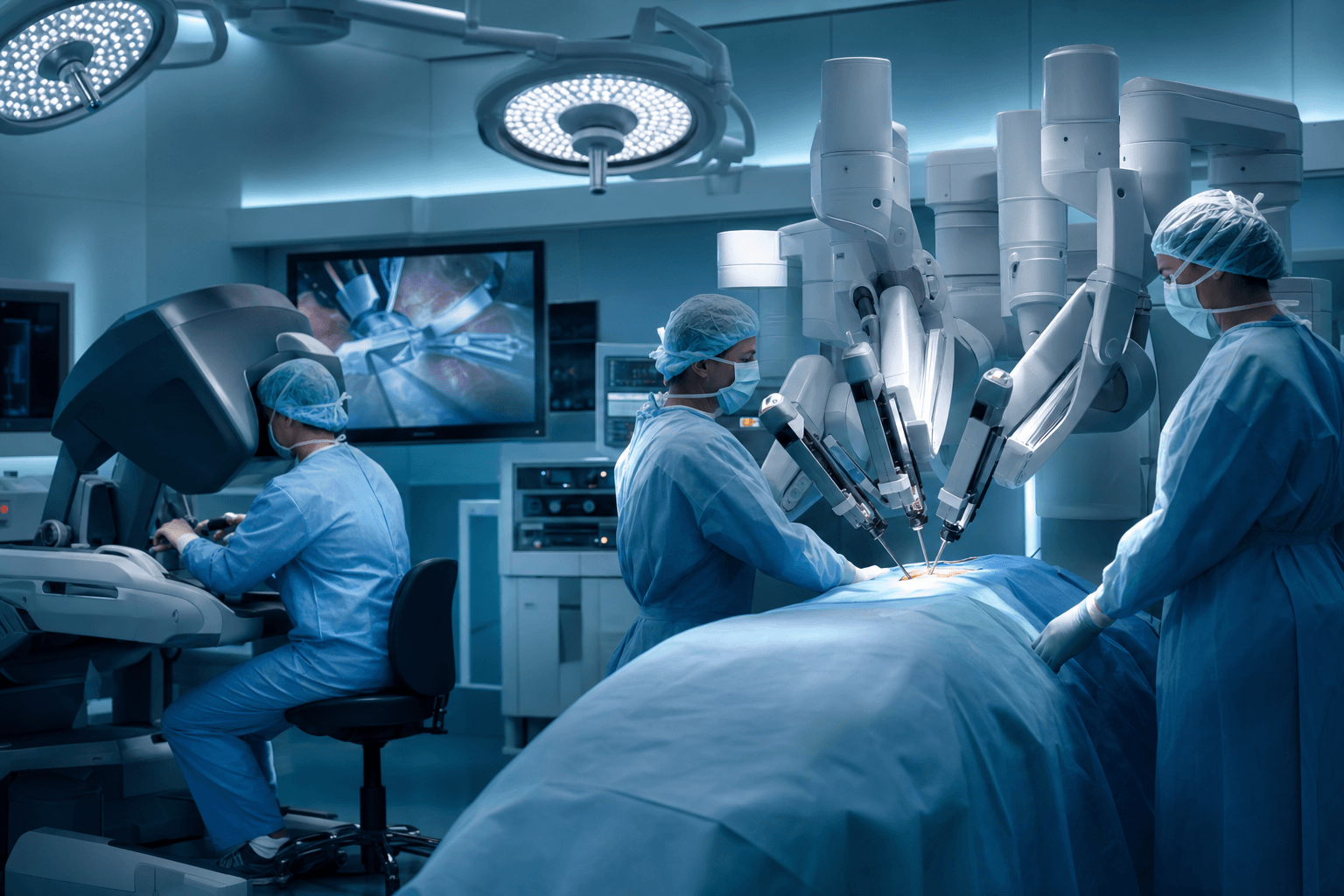
Ask almost anyone to name a surgical robot and you will get one answer: da Vinci. For roughly two decades, Intuitive Surgical's platform was not just the market leader in robot assisted surgery, it effectively was the market. Understanding how that happened, and why it is now changing, explains a lot about where surgery is heading, including for patients in smaller markets like Mauritius.
Military roots, civilian revolution
The technology traces back to research funded partly by American defence agencies in the late 1980s and 1990s. The original vision was telesurgery: a surgeon operating on a wounded soldier from a safe distance. That specific dream proved impractical at the time, but the underlying engineering, precise remote manipulation of instruments guided by video, turned out to be superb for a different purpose: operating through tiny incisions with more dexterity than conventional laparoscopy allowed.
Intuitive Surgical commercialised this work, and its da Vinci system received US regulatory clearance for general laparoscopic use in 2000. The company then did something clever: rather than pitching the robot for every operation, it focused on procedures where laparoscopy was genuinely hard, above all prostate removal. Suturing deep in the male pelvis is punishing with straight laparoscopic sticks. With wristed robotic instruments and 3D vision, it became far more manageable. Urologists adopted the platform enthusiastically, and hospitals discovered patients would actively seek out robotic prostatectomy.
What two decades of dominance produced
With patents protecting its core technology, Intuitive faced little direct competition for years. The results of that era were mixed in instructive ways.
On the positive side, millions of procedures were performed worldwide, generating an enormous evidence base and training ecosystem. Successive generations of the system brought better vision, smaller arms, single port options, and integrated staplers and energy devices. Structured curricula, simulators, and proctoring networks professionalised robotic training.
On the critical side, a near monopoly kept prices high. Hospitals paid heavily for the system itself, annual service contracts, and instruments with mandatory limited-use lifespans. Health economists questioned whether marketing sometimes outran evidence for certain procedures. These costs are a key reason robotic platforms remained concentrated in wealthy health systems while smaller nations, Mauritius included, mostly watched from a distance or accessed the technology through medical travel to hubs such as India, South Africa, and France.
The competitive era arrives
Key patents began expiring in the late 2010s, and the field has since opened dramatically. Several credible platforms now compete internationally, each with a distinct philosophy:
- Modular systems that place independent robotic arms on separate carts, allowing hospitals to buy capability incrementally.
- Platforms focused on specific niches such as orthopaedic joint replacement, spine surgery, bronchoscopy, and endovascular procedures, where robots assist very different tasks than soft tissue dissection.
- Lower cost challengers from manufacturers in India, China, South Korea, and Europe explicitly targeting price sensitive markets.
Competition is doing what competition does: pushing prices down, accelerating innovation, and forcing every vendor to prove value rather than assume it.
Why this matters far from the big hospital hubs
For a country of 1.3 million people, the economics of a premium surgical robot have always been difficult: the case volume needed to justify the investment is concentrated in a handful of specialties. The new generation of smaller, cheaper, modular systems changes that calculation. Regional private healthcare groups operating across the Indian Ocean and African markets are actively evaluating these platforms, and the pattern seen elsewhere suggests capability arrives first in private hospitals, then spreads.
For patients, the practical takeaway is to focus less on brand names and more on fundamentals. A da Vinci logo does not guarantee a good outcome, and a newer competitor platform does not imply a worse one. Team experience, procedure selection, and honest discussion of alternatives matter far more.
Beyond the console
The da Vinci era proved that surgeons would embrace robotics and patients would trust it. The next era will be defined by what dominance postponed: affordability, competition, better haptics, smarter imaging integration, and eventually careful, regulated use of automation for narrow subtasks. Those developments deserve their own discussion, but the direction is clear: robotic surgery is moving from exclusive flagship technology toward standard surgical infrastructure.
As always, whether any robotic procedure is right for you is a question for a qualified surgeon who knows your case, not for an article, however well informed.
The technology behind modern operating rooms, explained. Explore the wider Medtech medical-technology network.